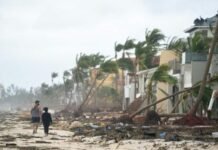


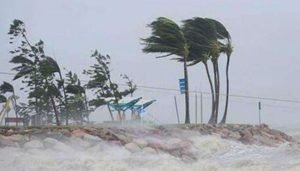
 Dhaka: Bangladesh and the surrounding regions are annually struck by devastating cyclones that cause a huge loss to lives and properties.
The visit of super cyclone ‘Amphan’ that swept the coastal areas on Wednesday is a yearly routine of its kind.
Historically, the impact of cyclones has been catastrophic; sometimes killing hundreds of thousands of people, not to mention damage to properties.
The majority of the damage is caused by water in the form of storm surges. Bangladesh is particularly vulnerable to storm surge flooding due to the geography of the land and region.
In Bangladesh, there are two cyclonic seasons — March-April and October-November, and during these periods, several small to large cyclones make landfall in Bangladesh.
The country faces the threat of cyclones on a yearly basis but the strength and ferocity of these cyclones are further escalated with the increased threats of climate change.
According to SAARC Meteorological Research Center (SMRC) report of 1998, from 1582 to 1974, 46 large scale cyclones hit the coastal region of SAARC countries; most of which made landfall in Chittagong, Cox’s Bazar, Khulna, the Sundarbans, Noakhali, Feni, Teknaf, Kutubdia and other coastal areas of Bangladesh (SMRC 1998- No.1).
Cyclone Roanu in May 2016 mainly impacted six coastal districts of Bangladesh but affected more than 1.3 million people and displaced 200,000 even though the storm was considered to be a low to medium strength.
The Bhola Cyclone of 1970 alone claimed almost half a million people’s lives, making it the deadliest disaster in the history of this region affecting Chittagong, Barguna, Khepupara, Patuakhali, and north of Char Burhanuddin, Char Tazumuddin and south of Maijdi, Haringhata. More than 400,000 houses and 3,500 educational institutions were destroyed by the cyclone.
In 1991, a cyclone occurred on April 29 of the year affecting the Chittagong district of southeastern Bangladesh. More than 10 million people became homeless due to the cyclone.
In 2007, Cyclone Sidr occurred on November 15, 2007, that claimed up to 10,000 lives, according to Red Crescent Society. The storm affected Bagerhat, Barisal, Patuakhali, Pirojpur, Khulna and Satkhira region. Livestock, farms and feeds worth more than Tk130 crore were destroyed.
In 2009, Cyclone Aila occurred on May 25, 2009, claiming up to 190 lives and affecting mostly southwestern coastal regions of Bangladesh.
A total of 6,000 kilometres of roads damaged, more than 500,000 people became homeless. There was complete destruction of 275 primary schools and damage to 1,942 schools due to the natural disaster.
In 2016, Cyclone Roanu occurred on May 21, 2016, claiming a total of 26 lives and affecting mostly Sandwip, Hatia, Kutubdia, Sitakundu and Feni district. Around one lakh houses were damaged and about 150,000 families affected.
In 2019, Cyclone FANI occurred on 04 May, 2019. It crossed Bangladesh on Saturday (04 May, 2019) at a weakened state, but still with an unexpected damage and loss to lives. A total of 15 districts were affected by cyclone FANI.
At least 20 people (11 because of storm and 9 because of thunder) were killed on May 3 and 4.
According to the government, about 53,000 acres of cropland and 13,000 houses were damaged. A total of 15,720 meters of embankment broke down.
In 2019, Cyclone Bulbul occurred on 09 November. It made landfall near the Sagar Islands of South 24 Pargana district in India’s West Bengal state around 9:00pm with a gale wind speed of 115-125km. At least 23 people died due to the impact of cyclonic storm Bulbul in Bangladesh, Crops around 2, 89,000 hectors of land in 16 districts were affected by the cyclone, according to the Department of Agriculture Extension (DAE).
The tropical cyclone damaged about 5,000 homes in the country’s south-western coastal districts, according to State Minister Enamur Rahman.