 News Desk: American major daily newspaper The Washington Post recently published a report on corruption allegation in some countries including Bangladesh during their fight against conronavirus.
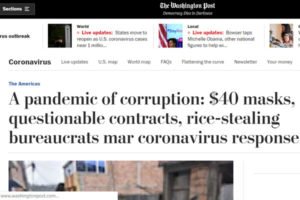
In the report titling ‘A pandemic of corruption: $40 masks, questionable contracts, rice-stealing bureaucrats mar coronavirus response” said countries large and small are shelling out trillions of dollars to combat both the coronavirus outbreak and its brutal economic fallout in what analysts are calling the largest financial response ever to a single global crisis. As governments race to source everything from food aid to face masks, they are prioritizing speed over transparency, dropping competitive bidding and other safeguards to keep pace with the pandemic.
Most have no choice. Given the speed of the still-unfolding crisis, it’s either buy quickly or put millions at risk. But the concern is rising about the percentage of the taxpayer dollars — and euros and yen and pesos and more — lining the pockets of corrupt bureaucrats, crony contractors and crime syndicates.
“There are cases that are happening now, in real time,” said Max Heywood, the head of advocacy for the anti-corruption watchdog Transparency International. “Looking at the gaps in the systems and the amount of money that is correctly being thrown at the problem, it’s fair to say we are very concerned.”
The newspaper on Bangladesh section wrote: Food aid for struggling workers locked out of their jobs is proving to be a particularly juicy target. When the government of Bangladesh launched an effort this month to distribute rice to its most vulnerable citizens, nearly 600,000 pounds disappeared.
About 50 people, including bureaucrats and local officials, were accused of trying to resell the rice at higher prices. The Bangladeshi government has overhauled the relief plan with the aim of bypassing bureaucrats.
“Such a national crisis was expected to bring out the best of human virtues — empathy and solidarity — which we see around in many ways,” said Iftekharuzzaman, the executive director of Transparency International Bangladesh, who goes by only one name. “But most regrettably and shamefully, the worst of human vices have also come out.”