Dhaka: The Awami League (AL)-led government has been “almost successful” in curbing terrorism and militancy in the country by taking various necessary steps after the gruesome attack on the Holey Artisan Bakery in Dhaka last year.
Following the attack, the ruling AL—as a political party—launched a countrywide social movement and different anti-terror campaigns, while the Sheikh Hasina administration carried out several raids on suspected terrorist hideouts across the country, with several terrorists being killed or blowing themselves up.
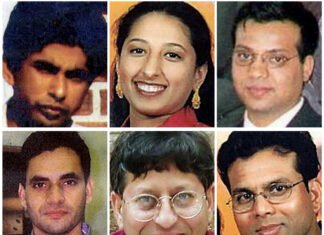
On July 1, 2016, the Gulshan attack shook the country, when five militants, equipped with sophisticated arms and ammunition, barged into the café and killed 20 people, including both foreign nationals and locals.
After the unprecedented attack, the ruling party’s leaders fanned out across the country and held one mass contact programme after another, as also public meetings and different awareness building campaigns against militancy and terrorism.
Senior AL functionaries had also formed anti-terrorism and anti-militancy committees, comprising public representatives from all political parties across the country, so as to forge a social movement and campaign to ensure the country’s youth does not choose this path of destruction.
Then the party’s top brass directed the Imams of mosques across the country to deliver ‘Khutba’ (sermons) before and after Jum’a prayers, highlighting the directives of the Holy Quran and Hadith against militancy and terrorism, which was one of the major initiatives to curb militancy.
Besides, after the unprecedented terror attacks on the Gulshan café and on the attendees at Eid prayers at Sholakia, leaders of all political parties and other stakeholders had emphasised the need for forging greater unity to combat militancy.
But the ruling party declined to forge any kind of unity with its arch rival, the Bangladesh Nationalist Party (BNP), as it claimed that the latter supports militancy. However, the AL did forge unity with all pro-Liberation forces to combat militancy and terrorism, which was another remarkable initiative against militancy.
The AL-led administration even held several meetings with the authorities of the educational institutions and asked them to be alert so that no student could join the terrorists.
According to police, they have so far carried out 20 big anti-militant drives in different parts of the country after the Holey Artisan attack, in which 57 militants, mostly top leaders and operatives of the neo-JMB, were killed. Besides, 41 others were captured. Talking to this correspondent, security analyst Brig. Gen. (retd) M Sakhawat Hossain yesterday said the Sheikh Hasina government does deserve credit for containing militant and terrorist activities in the country.
“After the brutal attacks, the AL-led government has been taking different steps towards curbing militancy and terrorism, though intelligence failure and a lack of coordination among the law enforcement agencies caused the rise of terrorism in the country,” he said.
He also said the ruling AL as well as its government should continue their social, political and diplomatic activities so that militancy cannot take root in the country.
“Militant and terrorist activities in the country have been curbed because of the time-befitting initiatives taken by the AL and our government,” said AL joint general secretary Mahbubul Alam Hanif. “We, the AL leaders, held mass contact programmes and public meetings and different awareness building campaigns across the country after the attack. Our administration, at the same time, took various necessary steps against militancy, because of which such attacks are declining gradually,” he added.
Meanwhile, AL general secretary Obaidul Qauder yesterday (Saturday) said that terrorism and militancy in the country have been curbed but not eradicated completely. He said this while paying tribute to the victims of the Holey Artisan Bakery militant attack at the Gulshan area of the capital.
He said, “It is true that militancy in Bangladesh has not been completely eradicated. However, the current government has done its best to curb it. It will not rest until militancy is rooted out from the country.”